ServicesGutters
Gutters in Macclenny, Hung and Pitched With Care
Gutters only help when they carry water away from your home, not over the edge onto your fascia and foundation. We install and repair gutters with the right slope, solid hangers and sealed joints, so they keep up with heavy afternoon rain for years.
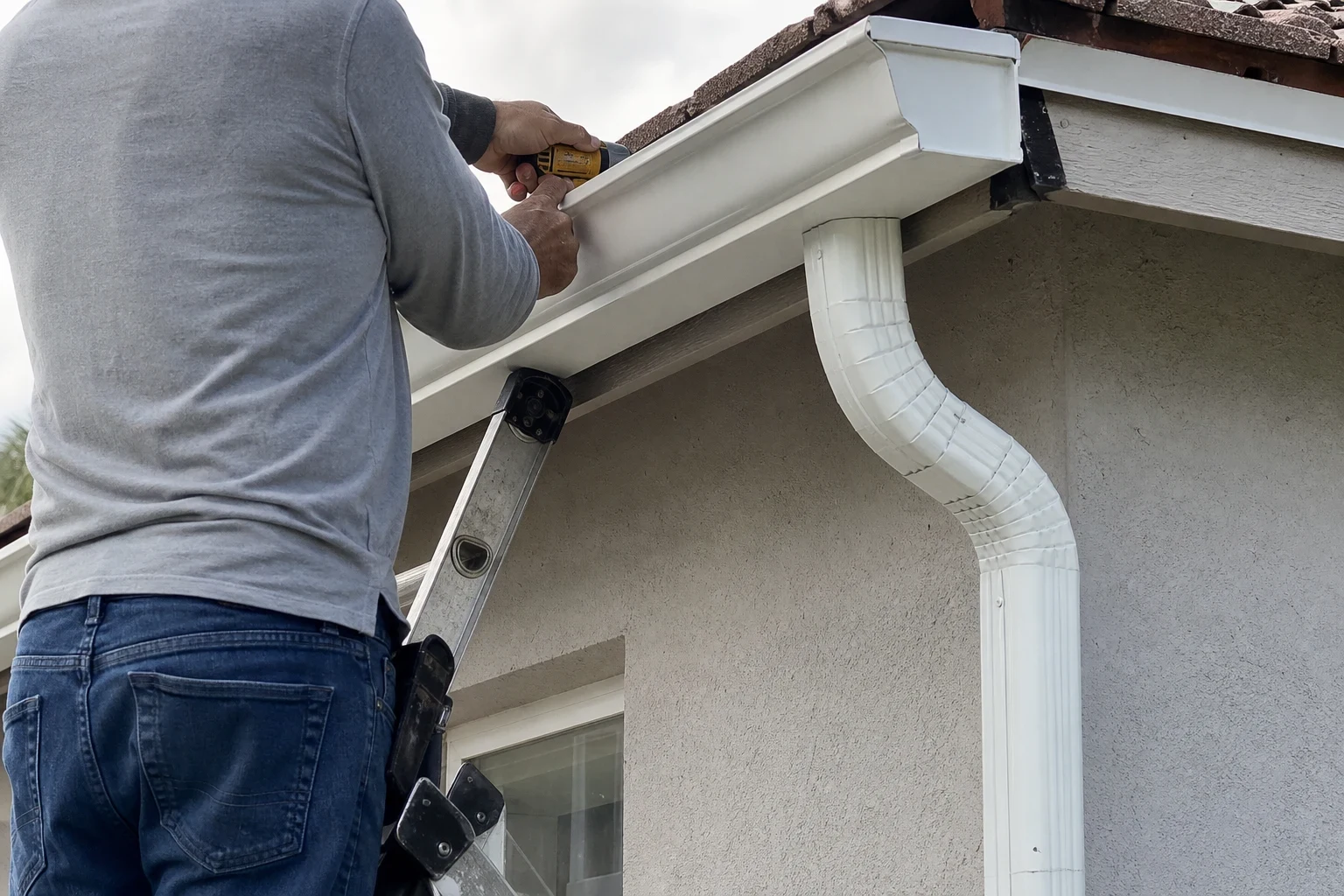
What good gutters do for your home
A gutter's work is easy to describe. It gathers rain at the roof edge and moves it to a downspout that empties well clear of your walls. When that breaks down, the damage is quiet. Water slips behind the gutter and rots the fascia board, stains the walls, and pools along the foundation where it softens the soil and finds its way under doors and slabs.
Most of the gutter trouble we see comes down to small installation details. A run with too little fall. Hangers spaced too far apart. An end cap that was never sealed. A downspout that dumps water right beside the house. We pay close attention to those details because they decide whether a gutter lasts or starts sagging after a few seasons.
We install new one-piece gutters formed on site, repair and reset existing runs, and add or reroute downspouts. If the roof edge itself needs work, our Roof Repair page explains how we handle that.
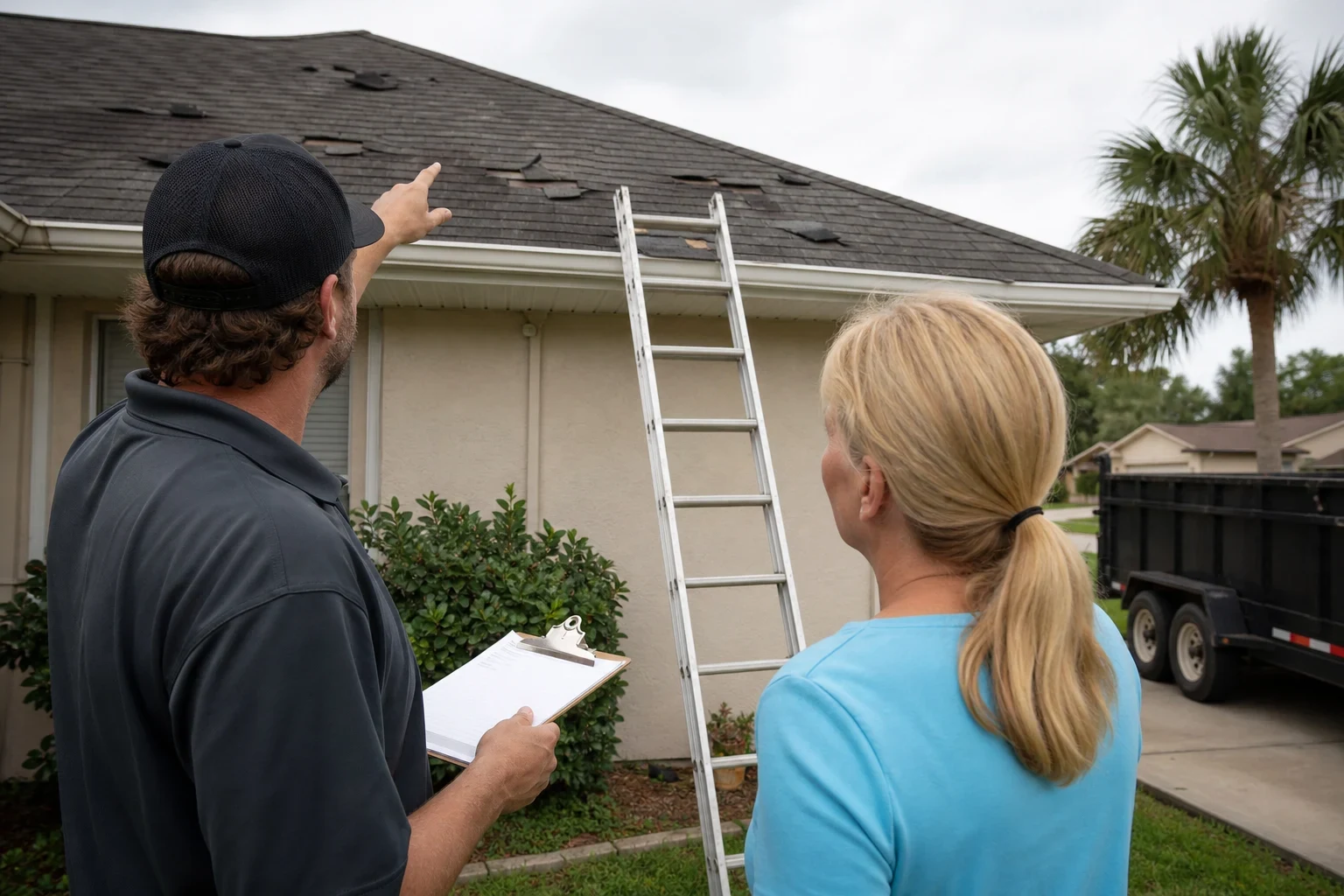
What our gutter work includes
- 01
One-piece aluminum runs
We roll out each gutter right in your driveway, cut to match the full length of the eave it serves. Seams appear only where a run turns or meets a downspout outlet, and fewer seams leave fewer spots for a drip to begin.
- 02
Steady fall toward every outlet
Each run is set with a consistent slope toward its downspout so water keeps moving. Water that sits in a flat gutter adds weight, breeds mosquitoes and pulls hangers loose over time.
- 03
Closely spaced hidden hangers
We fasten hangers into solid fascia and rafter tails, spaced close enough to carry a gutter packed with wet pine needles and oak leaves. Long runs get extra support near the corners, where the load is heaviest.
- 04
Corners and end caps sealed inside
Joints are riveted, then sealed on the inside where the water actually sits. A bead smeared on the outside looks fine for a year and then lets go.
- 05
Downspouts that lead water away
We place downspouts where they drain the most roof area. Then we fit extensions or splash blocks that carry the discharge out past your foundation, walkways and flower beds.
- 06
Fascia and drip edge check
Before anything is hung, we check the fascia for soft wood and make sure the roof's drip edge laps into the gutter instead of behind it. If a board is rotted, we show you a photo and explain the fix before any work is added.
Questions about Gutters?
Call(904) 937-1477Signs your gutters need attention
Water spilling over the front edge
Rain sheeting over the lip in a downpour points to one of a few causes: debris blocking the outlet, a slope that runs backward, or a gutter too narrow for all the roof draining into it.
Sagging runs or gaps at the fascia
A gutter pulling away from the house usually means loose or too few hangers, or soft wood behind them. It gets worse with every heavy rain.
Stains or peeling paint on the fascia
Dark streaks or blistered paint on the board behind your gutter mean water is creeping down the back instead of draining through. That is often the first sign of rot.
Puddles or washed-out soil by the foundation
Trenches in the mulch, standing water near the slab or a damp spot along a wall all mean a downspout is missing, disconnected or ending too close to the house.
Leaking joints and rusty spots
Drips at corners and joints, or rust on older steel gutters, tell you the sealant has failed. Patching can buy time, but widespread leaks usually mean it is time for new runs.
Shingle granules piling at the outlets
A handful of gritty granules in the gutter is normal on a newer roof. Heavy piles suggest the shingles are wearing out, and a visit from our Roof Inspections team is worth it.
How a gutter job goes
- 1
A technician visit at your home
Book a technician visit by phone and we come out to measure every roof edge, look at how water moves off your roof and check the fascia. The estimate is free and there is no obligation.
- 2
Every part listed on paper
Your estimate spells out each piece of the job: gutter footage, downspouts, any fascia repair, and options such as larger gutters or guards. Financing is available if you want to spread the cost out.
- 3
Install day
We protect plants and walkways, take down the old gutters and haul them away. Then we form the new runs on site, hang and pitch them, seal the joints and run a hose through every section to watch the water drain.
- 4
Walk-through and cleanup
We show you where each downspout sends water and pick up the old metal, screws and debris before we leave. Our gutter work is backed by a 5-year workmanship warranty.
What affects the cost of gutters
Gutter pricing depends on your home rather than a flat rate. We measure each job and list every part in the estimate, so you can see what you are paying for before you decide.
- Total length and corners
- More linear feet means more material, and every inside or outside corner adds a joint to form, rivet and seal.
- Downspout count and routing
- Each downspout, elbow and extension adds cost. Routing water around a driveway or patio takes more pieces than a straight drop.
- Height and access
- Two-story eaves, steep slopes or tight spaces between the house and landscaping take more time and ladder setup to work safely.
- Fascia condition
- If the wood behind the old gutters is soft, it has to be replaced before new hangers can hold. We only know for certain once the old gutters come down, and we show you what we find.
- Gutter size and add-ons
- Six-inch gutters cost more than five-inch but move more water off large roof areas. Gutter guards are an option that adds to the price.
Common questions about gutters
Which size gutter does my house need, five-inch or six-inch?
Most single-story homes with an average roof do fine with five-inch gutters. Big roofs, steep pitches or long valleys that dump into one corner often call for six-inch gutters and larger downspouts. We choose the size at the visit from your actual roof, not a standard pick.
Is it possible to fix my gutters rather than replace them?
Many times it is. Adjusting the slope, adding hangers and resealing some joints can restore a solid gutter that has only sagged or begun to drip. If the metal has rusted through or most joints leak, we'll say plainly that new runs are the better spend.
How long will installation take on my home?
On a typical single-story home, new gutters usually go up in one day, cleanup included. A second story, a larger home or fascia that needs replacing can stretch that. You'll know what to expect before we put the job on the calendar.
Do gutter guards end gutter cleaning for good?
They greatly reduce cleaning, especially near pine trees, but they don't eliminate it. Pine needles and fine debris can still sit on top, so a quick look once or twice a year is a good habit.
Is a new roof a good time to replace gutters too?
Usually, yes. The new roof gets fresh drip edge, and hanging new gutters right afterward lets everything line up correctly from day one. The Roof Replacement page explains how we schedule the two together.
Does insurance pay for gutters damaged in a storm?
Often it does. If strong wind or a falling branch bends a gutter or tears it off, that damage is typically included with the rest of the storm claim. We work with your insurance adjuster directly on storm damage claims and can take photos of the damage for you. The Storm Damage Repair page covers the rest of the process.

Ready for gutters that keep up with the rain
Describe what happens at your roof edge during a storm, and we will schedule a time to see it for ourselves. The estimate costs nothing, and we explain each recommendation before you decide.